
Aspen Snowmass, Actually Explained
Four mountains, one ticket, and the most expensive town in American skiing — here's what a real week actually looks like, from the bowl hike to the champagne shower.
📍 Aspen Snowmass 2026/27 — At a Glance
| Opening Day | Nov 26, 2026 (Ajax & Snowmass) | Closing | Apr 18, 2027 |
| Highlands / Buttermilk | Dec 12, 2026 – Apr 11 / Apr 4 | Snowfall | ~300 in/yr · Snowmass 330+ |
| 4 Mountains | Ajax · Highlands · Buttermilk · Snowmass | Combined | 5,500+ acres · 336 trails · 43 lifts |
| Ikon Pass | $1,349 renewal / $1,399 new · 7 days | Day Ticket | $179–249 advance |

There are two Aspens, and they rarely get described in the same breath. One is the postcard version: private jets on the tarmac, fur-lined boots at 8 a.m., a lunch reservation at a mid-mountain bistro where somebody will eventually spray champagne on the table. The other is the working version: four genuinely distinct ski mountains linked by a free bus system, a town that still looks like the 1880s silver-mining camp it once was, and terrain that runs the full range from a 22-foot superpipe to a hike-to bowl that tops out above 12,000 feet.
The two versions are both true, and they share one practical consequence: everything here is priced like the postcard, but it skis like the working mountain. Most people trip over the first part and never experience the second. This guide is about getting to the second part without burning a month's rent on the first.
First, the map-level basics. Aspen Snowmass is not one resort — it's four mountains owned by the same company, sold on the same lift pass, and connected by the Roaring Fork Transit Authority's free buses. Together they add up to 5,500-plus skiable acres, 336 named trails, 43 lifts, and eight terrain parks. Aspen Mountain (locals still call it Ajax) drops straight into the town of Aspen. Snowmass, the biggest of the four, sits about 10 miles down-valley with its own slopeside village. Aspen Highlands is the expert's mountain, home of the legendary Highland Bowl. Buttermilk is the beginner's mountain that happens to host the X Games every January.
In This Guide
What's New for 2026/27 · The Four Mountains · Terrain Breakdown · Passes & Real Cost · Getting There · Where to Stay · Eating & Ski School · Altitude & Weather · Après-Ski · Crowds · Best Time · Checklist · Aspen vs Vail vs Jackson Hole · FAQ · Gear
1. What's Actually New for 2026/27
The big operational change this season is simpler than it sounds: the reservation requirement is gone. For the past few seasons, Aspen Snowmass made you book lift access in advance. For 2026/27, all four mountains dropped it — if you hold a pass or a ticket, you just show up and ride. The Ikon Base Pass also quietly expanded: Snowmass now offers five days of Base Pass access with blackout dates, while Aspen Mountain, Highlands, and Buttermilk remain on the full Ikon Pass only. If you've been holding a Base Pass and hoping to sample Aspen, this is the season Snowmass becomes reachable.
On the pass side, the resort's own product line got reshuffled. The old Valley Pass and Alpine 1-Day Pass are discontinued. In their place are two new products: a Weekday Pass (unlimited Monday–Friday, plus bonus early- and late-season weekends) and a Flex Pass (four to seven days to use anytime, no blackout dates). The Premier Pass remains the flagship at roughly $3,000, and it now throws in a complimentary Ikon Base Pass. If you skied last season on the Valley Pass, there's a 20% discount toward the new Flex Pass to ease the transition.
None of this changes the headline economics: Aspen Snowmass is still the most expensive ski day in America. A 2025 cost study pegged a full day here — ticket, rental, lodging share, meals, and a half-day group lesson — at about $2,004, tied with Beaver Creek for the top spot. The single biggest driver is the $429 half-day group lesson, the priciest in the country, plus an average nightly lodging rate of $1,168. Knowing the numbers up front matters, because the strategy for making Aspen work is entirely about where you spend and where you don't.
2. The Four Mountains, Zone by Zone
This is the part every Aspen guide botches by lumping the four together. They are not interchangeable, and picking the wrong base for your group is the single most common way to have a mediocre, expensive week. Here's what each one actually is.
Aspen Mountain (Ajax) — the steep original
Ajax is the mountain you see from the town, and it's the reason Aspen became Aspen. It rises 3,267 vertical feet straight out of the sidewalk — ride the Silver Queen Gondola from the edge of downtown and you're on snow. It's 675 acres and 76 trails, and it has zero green runs. This is a bump-and-steeps mountain: intermediates lap the long blue of Little Nell and Ruthie's Run, while experts grind Copper and Spar Gulch's leg-burning moguls. The Silver Queen Gondola is the only way up from the base, which means everyone funnels through one point on a powder morning. Aspen Mountain is also the smallest and most crowded of the four on peak days.
Aspen Highlands — the expert's home
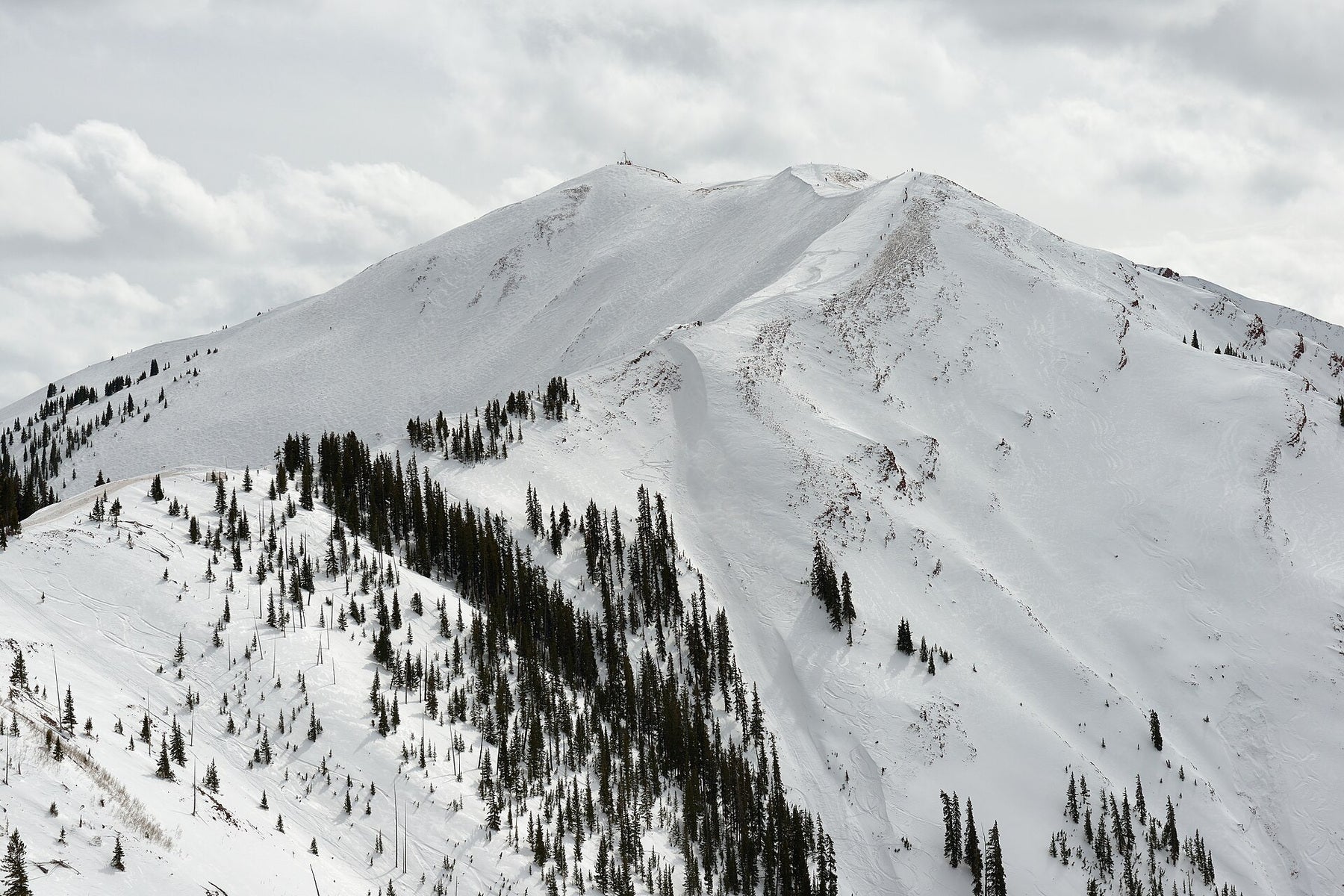
Highlands is what most hardcore skiers mean when they say "Aspen." Summit elevation 11,675 feet, trail makeup roughly two-thirds expert, and no marked greens. The draw is the Highland Bowl, a 12,392-foot hike-to amphitheater that is one of the steepest sustained inbounds lines in the country. Reaching it means riding the Exhibition and Loge Peak lifts, then bootpacking 30 to 60 minutes (most people average about 45) with an 860-foot elevation gain. From the top, prayer flags mark the ridge, and the entry chutes — Full Curl, Ozone, Be One, plus the G-Zones and Y-Zones — fan out across the bowl. The Strava record for the hike is 14 minutes 41 seconds, set by ski mountaineer John Gaston, which tells you what "in shape" means up here. For strong skiers who'd rather not hike, the Deep Temerity lift serves steep trees like Kessler's and Koehle's.
Buttermilk — the beginner's mountain that hosts the X Games
Buttermilk is the one Aspen mountain that actually welcomes first-timers — 35% of it is beginner terrain, anchored by the Panda Peak learning zone and the gentle Blue Ox and Homestead cruisers. It also has nine terrain parks and the 22-foot superpipe the X Games pros ride every January; the features stay up all season, so anyone can lap the same park as the medalists. The quietest local move in Aspen is to ski Buttermilk on a powder day while everyone else stampedes Highlands and Snowmass — short lines, empty groomers, and snow that holds for days because nobody thinks to look there.
Snowmass — the family flagship
Snowmass is roughly the size of the other three mountains combined: 3,332 acres, 94 runs, and a 4,406-foot vertical drop that is the longest continuous in Colorado. It's the only one with a true slopeside village and ski-in/ski-out lodging at scale, which makes it the default for families and multi-day trips. The signature intermediate run is Big Burn, an enormous open face that stays soft for hours on powder days. Beginners get Long Shot, a 5.3-mile cruiser that is the longest beginner run in the Rockies, and Fanny Hill right at the base. Experts get Hanging Valley Wall (a sustained 40-plus-degree headwall), The Cirque (a short hike from Sam's Knob), and the Burnt Mountain Glades, which open last and hold untracked snow longest.
| Mountain | Acres | Signature | Best for |
|---|---|---|---|
| Aspen Mountain (Ajax) | 675 | Copper & Spar Gulch moguls, Ruthie's Run | Strong intermediates & experts staying in town |
| Aspen Highlands | 1,010 | Highland Bowl, Deep Temerity trees | Experts — the whole reason to come |
| Buttermilk | 470 | Panda Peak learning zone, 9 parks, X Games pipe | Beginners, families, park riders |
| Snowmass | 3,332 | Big Burn, Long Shot, Hanging Valley Wall | Families & everyone else — the all-rounder |
3. Terrain Breakdown — Who Skis Where
Beginners should not set foot on Ajax or Highlands. Both mountains have zero green runs, and Highlands in particular will funnel a nervous skier into terrain they have no business being on. The beginner plan is simple: Buttermilk's Panda Peak magic-carpet area for day one and two, then Snowmass's Long Shot and Fanny Hill for the confidence-building step up. Group lessons at Buttermilk start at 9:30 a.m. daily, and the instructors here are among the most credentialed in North America — the ski school runs training every single day of the season, and roughly 1,300 pros staff the four mountains.
Intermediates live on Snowmass and Ajax. Snowmass's Big Burn is the standout — a vast groomed face that's best on fresh-cord mornings before it gets skied out. Ajax's Ruthie's Run and Little Nell are classic fall-line blues with the town spread out below you. On Snowmass, intermediates should also lap Elk Camp Meadows and Naked Lady for high-speed cruising.
Experts come for two things: Highland Bowl and Hanging Valley Wall. The Bowl is a half-day commitment — plan two to three hours door to door for a single lap — but it's the defining Aspen experience. The Wall is lift-adjacent by comparison, a 40-degree-plus headwall into a narrow valley off Snowmass's Cirque. Burnt Mountain Glades are the sleeper: they open last in the season and hold untracked powder for days after a storm because the hike keeps most people out.

4. Lifts, First Chair, and the Shuttle Reality
The lifts themselves are good — the Silver Queen Gondola on Ajax, the Elk Camp Gondola and Village Express at Snowmass, Cloud Nine and Deep Temerity at Highlands, Summit Express at Buttermilk. The thing to understand is that you cannot ski between the four mountains. They are separate bases a shuttle ride apart. That's the trade-off for having four distinct hills: every morning starts with a decision about which base you're committing to, and the free RFTA buses — which run every 10 to 15 minutes and are genuinely excellent — are the connective tissue.
Practical rules that hold up: on a powder morning at Ajax, the Silver Queen Gondola line is the bottleneck, so either be on it at open or accept the wait. At Snowmass, the frontside of Sam's Knob is the crowd magnet; head for the Elk Camp area or the Campground lift on the backside and you'll ski empty lines. At Highlands, the Bowl hike queue peaks between 10:30 and noon — go first thing, or after 1:30, to skip it. The Deep Temerity lift nearly always has the shortest line on the mountain because it only serves expert terrain.
One weather note worth internalizing: the upper mountain can close for wind and visibility, and the change from "clear" to "flat light" happens fast at 11,000 feet. Check the lift status before you pick a base, because once you're on the wrong mountain, switching costs you a bus ride.
5. Passes, Tickets, and the Real Cost
Let's put real numbers on the most expensive ski day in the country.
Ikon Pass is the default answer for most visitors. For 2026/27 it launched at $1,349 for renewing adults and $1,399 for new buyers, and it includes seven days across all four Aspen mountains with no blackout dates and no reservation requirement. By June the full pass had climbed to $1,449, and it keeps going up through fall before sales close in December. The Ikon Base Pass starts at $949 (rising to $1,019 by June), and this season it newly includes five days at Snowmass only, with blackout dates of December 26–30, January 16–17, and February 13–14. Aspen Mountain, Highlands, and Buttermilk are not on the Base Pass.
If Aspen is your main trip rather than one stop on a tour, the resort's own passes deserve a look. The Premier Pass runs about $3,000 and now includes a complimentary Ikon Base Pass. The new Flex Pass gives four to seven days with no blackouts, and the Weekday Pass is unlimited Monday through Friday. Active-duty military and their dependents get 50% off tickets and Premier Passes.
Single-day tickets are where the sticker shock lives: $179 to $249 in advance, and meaningfully more at the window — buying online ahead of time saves 20–30%. But the ticket is the cheap part. A half-day group lesson runs $429 (the most expensive in America), a private lesson easily clears $1,000, and average lodging is $1,168 a night. The honest math: if you're skiing four or more days, the Ikon Pass pays for itself against day tickets alone, and it removes the per-day decision paralysis.

6. Getting There Without Losing a Day
Aspen/Pitkin County Airport (ASE) is one of the most convenient ski airports in the country when it works — it's minutes from both Aspen and Buttermilk, with direct winter flights from Denver, Dallas, Los Angeles, and Chicago. It's also one of the most weather-sensitive, sitting in a tight mountain valley. When the ceiling drops, flights divert to Grand Junction (about two hours by road) or get canceled outright. The reliable alternative is flying into Denver (DEN) and driving the 200 miles west — about four hours via I-70 and Glenwood Canyon, with winter traction requirements in effect. Eagle County Regional, near Vail, is a two-hour middle option.
Once you're in the valley, forget the car. The RFTA bus system is free, frequent, and set up for skis, and it links all four bases plus the town. Parking at Snowmass Village is genuinely expensive — the garage runs $8 an hour up to a $56 daily max — while the Two Creeks lot is $25 weekdays/$35 weekends and free with four-plus people in the car. The smart local move is parking free at Town Park Station and riding the RFTA in, or using Buttermilk's free lot as your valley base.

7. Where to Stay
There are two lodging centers and a budget escape hatch.
Aspen town is the liveliest and the most expensive — boutique hotels and five-star properties within walking distance of the Ajax gondola, plus the dining and nightlife. It's the right call if your group is about the town as much as the snow, and you accept the premium.
Snowmass Village is the family and ski-in/ski-out answer: over 90% of its lodging is slopeside, and the whole base is pedestrian-friendly. If kids are in ski school, this is where you want to be, because the walk-to-lesson friction disappears. It's also generally cheaper per night than Aspen proper.
Basalt, Carbondale, and Woody Creek down-valley are the budget play, 10 to 20 minutes out on the RFTA bus. The trade-off is a longer morning commute, but you'll save hundreds per night, and the bus system makes it workable in a way that most resort valleys can't match.

8. Eating, and the Ski-School Logistics Nobody Mentions
Aspen's food scene rivals a real city. The mountain-side legends are Cloud Nine Alpine Bistro at Highlands and Merry-Go-Round on the same mountain. Cloud Nine is the famous one: at 2 p.m. the bistro's second seating turns into what regulars call the "shower," with music up, people dancing on tables, and champagne sprayed over the room. It's a genuine cultural phenomenon — and it books out weeks to months in advance, so "we'll just show up" is not a plan. Merry-Go-Round is the quieter alternative, a white-tablecloth spot with a $6 happy hour and wild game chili that's the local post-Bowl ritual.
In town, the greatest hits are Paradise Bakery (the cookie line is a midday institution), White House Tavern, Matsuhisa, Meat & Cheese, and Ajax Tavern at the gondola base. Book dinner before you arrive — the good tables on peak weeks fill up weeks out, and "winging it" in Aspen means eating at the bar or waiting an hour.
The ski-school logistics tip that actually matters: book lessons before arrival and confirm the exact meeting area. Each mountain has its own drop-off point, and a family that books Snowmass lodging but a Buttermilk lesson has signed up for a shuttle ride every morning. Choose lodging based on the walk to the lesson, not the room rate. Kids' programs center at Snowmass's Treehouse Kids' Adventure Center and Buttermilk, and the children's lesson capacity fills fastest on holiday weeks.
9. Altitude, Weather, and Snow Timing
The valley floor sits at about 8,000 feet and the summits reach 11,675 (Highlands) and 12,392 at the top of the Bowl hike. That's high enough to flatten flatlanders, and the classic mistakes are real: people underestimate the first 48 hours, and they overdress for the Bowl hike. The hike is genuine exertion — you will sweat through a puffy jacket and then freeze at the top. Wear a breathable base and mid-layer, carry the insulated layer in your pack, and put it on right before you drop in. Sunscreen and water are non-negotiable at this altitude.
For conditions, the pattern to know is that Aspen averages around 300 inches a year of dry Rockies powder, with Snowmass running slightly higher at 330-plus thanks to elevation and exposure. On a storm day, the trees and lower zones often ski better than a wind-hammered summit; on a bluebird day, start high and follow the sun down. The high alpine here can go from clear to flat light inside an hour, so carry a lens for it.
10. Après-Ski and the Town
The après scene is the other half of what you're paying for. The two most famous stops are Cloud Nine (covered above — the champagne shower is a one-time bucket-list event) and Eleven212 at the base of Ajax, formerly Snow Beach, open to the public on weekends and holidays with a gondola to get you home safely. For a quieter end to the day, locals head to Slow Groovin' BBQ at Highlands base, the Highlands Ale House, or the Home Team BBQ at Buttermilk. In town, the apres runs from casual deck bars at the Ajax base to some of the smartest cocktail lounges in American skiing, and the pedestrianized downtown core makes it all walkable.
The honest take from people who live here: Cloud Nine is fun once, but for an actual conversation about the day's lines, the quieter base decks and town bars are the better bet — and you don't need to reserve them months out.
11. The Crowd Question
Here's the best-kept secret about Aspen: it's rarely crowded. Four hours from Denver and expensive enough to filter out the day-trip crowd, these mountains don't see the weekend-warrior stampedes that define the I-70 resorts. A former Snowmass instructor put it plainly: apart from a handful of peak days, you'll find plenty of space to ski. The exceptions are holiday weeks, powder mornings, and the first hour after a major lift opens.
Where the crowds do concentrate, they concentrate predictably: the Silver Queen Gondola at Ajax, the Sam's Knob frontside at Snowmass, and the Bowl hike line at Highlands between 10:30 and noon. The countermoves are equally predictable — start away from the obvious base lift, ride the backside lifts, and on a powder day, consider the reverse play: Buttermilk, which everyone ignores when the big mountains get the fresh snow, and which keeps short lines and soft groomers all morning.
12. Best Time to Visit
January through early March is the window for reliable winter snow, with the deepest base and the highest prices. March and early April trade a little snow reliability for longer days and softer afternoon corn, and late-season is when the value window opens — Snowmass typically closes last on April 18, with Buttermilk winding down April 4. If you want the X Games, that's late January at Buttermilk, and it draws a crowd all its own. If you want empty slopes and don't mind variable conditions, early December and late April are the quietest stretches.
13. Pre-Trip Checklist
- Buy the Ikon Pass (or Flex/Weekday Pass) before fall price climbs — or lock advance day tickets at $179–249
- Book Cloud Nine and your dinner tables weeks ahead on peak weeks
- Reserve lessons before arrival and confirm the exact meeting base
- Pick your base by group: Ajax/Highlands for experts, Snowmass for families, Buttermilk for beginners
- Check ASE flight reliability; have a Grand Junction or Denver fallback
- Plan on RFTA buses — skip the rental car or park free at Town Park Station
- Pack a breathable layer for the Bowl hike, a flat-light lens, sunscreen, and water
- Budget realistically: $1,168/night lodging and $429 group lessons are the norms
14. Aspen vs Vail vs Jackson Hole
| Factor | Aspen Snowmass | Vail | Jackson Hole |
|---|---|---|---|
| Pass | Ikon — 7 days, 4 mountains | Epic — unlimited | Ikon — 7 days, reservations required |
| Town | Historic mining town — best dining in skiing | Purpose-built Tyrolean village | Authentic cowboy town, separate from resort |
| Crowds | Rarely crowded — 4 hrs from Denver | Busy on weekends (I-70) | Tram line is legendary |
| Cost | Most expensive in America (~$2,004/day) | Very expensive (~$1,971/day) | Expensive (~$1,371/day) |
The short version: choose Aspen for the town and the four-mountain variety, Vail for the back bowls and groomed scale, Jackson Hole for the steepest lift-served expert terrain. Aspen's edge is that no single mountain needs to carry the whole trip — you get four distinct identities under one pass, which no other major U.S. resort can claim.
15. Frequently Asked Questions
How many days do you need? Three full days covers the signature zones; four or five gives you weather flexibility and a second shot at the Bowl. A week lets you actually sample all four mountains rather than sprinting between them.
Is Aspen good for beginners? Yes — but only at Buttermilk and Snowmass. Ajax and Highlands have zero green runs. Book a Buttermilk lesson for day one and do not follow an expert friend onto Ajax "just to look."
Is Aspen on the Epic Pass? No. It's an Ikon Pass resort. The full Ikon Pass gets seven days across all four mountains; the Ikon Base Pass gets five days at Snowmass only this season.
Should you rent a car? Generally no. ASE is minutes from the slopes if you fly in, and the free RFTA buses cover everything once you're in the valley. A car is only useful if you're doing a multi-resort Colorado loop.
Is the Highland Bowl hike worth it? For strong skiers, yes — it's the defining Aspen experience and some of the steepest sustained inbounds terrain in the country. Budget two to three hours for one lap, go early or after 1:30 to dodge the queue, and don't overdress.
What's the biggest mistake people make? Two tied: trying to ski all four mountains in one day, and under-budgeting. Pick a base, follow the snow, and price the lodging and lessons before you book the flight.
Do you need reservations? Not for lifts this season — Aspen Snowmass dropped the reservation requirement for 2026/27. You still need reservations for Cloud Nine and the good dinner tables.
When is the X Games? Late January at Buttermilk, with free spectator access. The superpipe events are the easiest to watch, and the features stay up all season for anyone to ride.
16. Gear That Earns Its Place
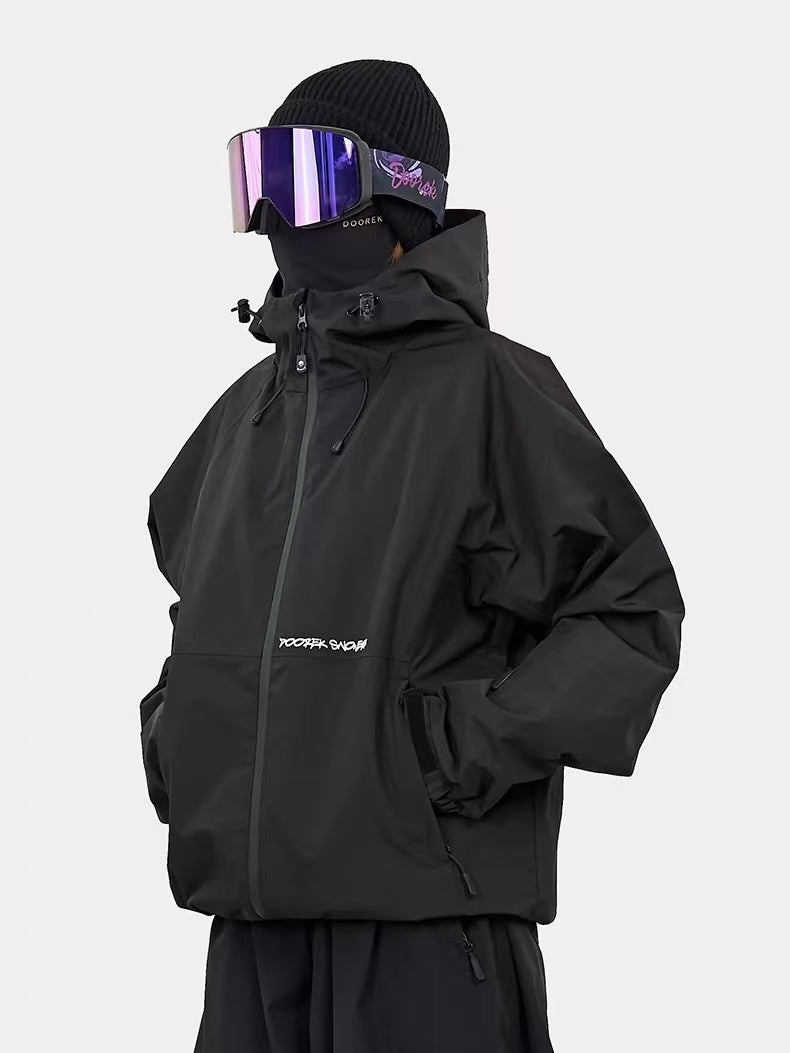
At 8,000 to 12,000 feet with wind, flat light, and a bootpack hike on the menu, the gear checklist isn't about fashion — it's about not letting the elements end your day early. A waterproof shell that blocks the wind, an insulated mid-layer you can strip for the Bowl hike, gloves that hold up to the chairlift, and a lens for flat light all earn their weight. We build for exactly these conditions:
NowInSnow 10K Jacket
Fleece-lined, 10K waterproof — the shell for long, windy chairlift days.
Shop the jacket →DØCSNO 20K Ski Pants
ePTFE 20K waterproof — for storm days when the summit is socked in.
Shop the pants →Monterest 20K Hardshell
Kongshan 20K hardshell — the wind-blocking layer for the Bowl ridge.
Shop the hardshell →Our Take
Aspen Snowmass doesn't try to be the biggest or the steepest — it tries to be the most complete, and at that it succeeds. Four real mountains, a genuinely historic town, and crowds that never materialize the way they do on the I-70 corridor. The price is the price: this is the most expensive ski day in America, and no amount of strategy erases that. But if you pick the right base for your group, buy the pass early, and plan the lunch reservation before you get on the plane, you'll get the working version of Aspen instead of just the postcard — and the working version is worth the trip.
Information and prices can change by date and operating conditions. Check the resort and pass operator before booking.