
Welcome to Mammoth: The 2026/27 Season Guide
Refreshed for the 2026/27 season from resort announcements, local trip reports, and recent visitor notes.
Every powder Saturday at Mammoth plays out the same way: by 5 a.m., cars with "red plates" — the rental plates that Southern Californians drive up from LAX — are already crawling up US-395. By 8 a.m. the lots at Main Lodge are filling, and the Panorama Gondola line starts to stack. By 9:30 the home runs off Chairs 1 and 3 are chopped up. And somewhere on the upper mountain, Chair 23 is either delivering the best refills in California or sitting dead-still in a wind hold. That dual personality — legendary terrain on one hand, crowds and Sierra weather on the other — is what defines Mammoth.
Here's the practical version: Mammoth is an 11,053-foot volcano in the Eastern Sierra with 3,500+ skiable acres, 178 named trails, and 25 lifts. It averages roughly 400 inches of snow a year. It is owned by Alterra Mountain Company and sits on the Ikon Pass. The base village is Mammoth Lakes, a real California mountain town rather than a manufactured resort village. For SoCal skiers it is the default big-mountain trip; for Ikon Pass holders from farther out, it is a convenient stop on a multi-resort winter.
📌 Mammoth Mountain 2026/27 — At a Glance
|
Opening Day: Nov 13, 2026 Typical Closing: late May – June (July 4 in big years) |
Base / Summit: 7,953–8,900 ft / 11,053 ft Vertical Drop: 3,100 ft |
|
Terrain: 178 trails · 3,500+ acres · 25 lifts Longest Run: Road Runner, 3 miles |
Ikon Pass (Adult): $1,349 renewal / $1,399 new Ikon Base (Adult): $949+ (blackouts: Dec 26-30, Jan 16-17, Feb 13-14) |
|
Best Snow: January – March Best Corn: April – late May |
Closest Airports: Mammoth Yosemite (14 mi) · Reno (171 mi) · LAX (318 mi) |

Table of Contents
1. What's New for the 2026/27 Season
Mammoth Mountain has locked in Friday, November 13, 2026 as its target opening day, announced roughly 113 days out. It is one of the earliest opening dates in North America and continues Mammoth's habit of opening in early to mid-November when conditions allow. The 2025/26 season opened a week later on November 20 after a warm start, yet the resort still spun lifts until June 7 — a textbook example of Mammoth's season-length advantage.
For 2026/27, the Ikon Pass pricing breaks down like this:
- Full Ikon Pass: $1,349 for renewing adults, $1,399 for new passholders. Mammoth is unlimited with no blackout dates. Also includes Mammoth's sister resort June Mountain.
- Ikon Base Pass: from $949 for adults. Mammoth is unlimited on the Base tier, but blackout dates apply: December 26–30, 2026; January 16–17, 2027; February 13–14, 2027.
- Ikon Session Pass: from $299 for 2–4 day bundles.
- Quad Pack+: Mammoth's own four-day bundle broke down to roughly $100 per day before a late-July 2026 price increase, with no blackout dates and 25% off lodging.
- Refund policy: add the refundable option and don't scan your pass by January 15, 2027, and you get 100% back. One scan gets you 50% back.
The resort is also pushing its Via Ferrata summer experience as a year-round attraction, with six guided routes, iron rungs, steel cables, and suspended bridges. By November that is irrelevant, but it signals how hard Mammoth is working to keep the mountain relevant outside of ski season.
2. Mountain Layout: The 5 Zones You Need to Know
Mammoth is big enough that your day depends heavily on where you start. The mountain funnels into three main base areas and two distinct upper zones. Here is how they actually ski:
| Zone | Best For | Key Lifts | Signature Runs | Vibe |
|---|---|---|---|---|
| Main Lodge | Central access, experts, park riders | Panorama Gondola, Chairs 1, 2, 3 | Unbound Main Park, Climax, Cornice | Busiest base; fills first |
| Canyon Lodge | Intermediates, families, après | Chairs 7, 8, 10, 16, 17 | Broadway, Stump Alley, Schoolyard | Good parking; DJ on weekends |
| Eagle Lodge | Beginners, avoiding crowds | Eagle Express (Chair 15) | Holiday, Sleepy Hollow, Christmas Tree | Least crowded base |
| The Summit / Chair 23 | Experts, chutes, cornices | Chair 23, Panorama Gondola | Wipeout, Dropout, Paranoid Flats | Wind holds common |
| Unbound Parks | Park rats, freestyle progression | Chairs 6, 12, 14 | Main Park, South Park, Forest Trail, Superpipe | World-class features |

3. Terrain Breakdown — Named Runs That Actually Matter
Mammoth's trail count breaks down to roughly 25% beginner, 40% intermediate, and 35% advanced/expert. The real story is the vertical and the variety: you can ski 3,100 ft top-to-bottom, and the upper mountain is genuinely steep. Do not trust trail-map colors alone; the pitch and exposure at 11,000 ft make runs feel harder than their rating.
Beginners: Start at the Schoolyard learning area or the Discovery Chair near Eagle Lodge. The dedicated green runs — Sesame Street, Pumpkin, Easy Rider — are wide and forgiving. At Eagle, Holiday and Sleepy Hollow are confidence-building cruisers. Strong beginners can even take the 3-mile Road Runner from near the summit all the way to the base, which is a memorable first "big mountain" run. A common local tip is to ride Chair 17 (Schoolyard Express) for nervous kids: it loads slowly and the runs are wide and long.
Intermediates: This is where Mammoth earns its reputation. Long groomed runs like Broadway, Stump Alley, Solitude, and Goldhill give high-speed mileage without constantly funnelling you onto blacks. From Eagle Express (Chair 15), Christmas Tree, Chickadee, and Watertank are rolling blues. From Canyon, Chair 16 serves Downhill, Sideshow, and Avalanche as stepping-stone blues. Goldhill and Solitude are the kind of runs that stay groomed and relatively quiet even when the base areas are mobbed.
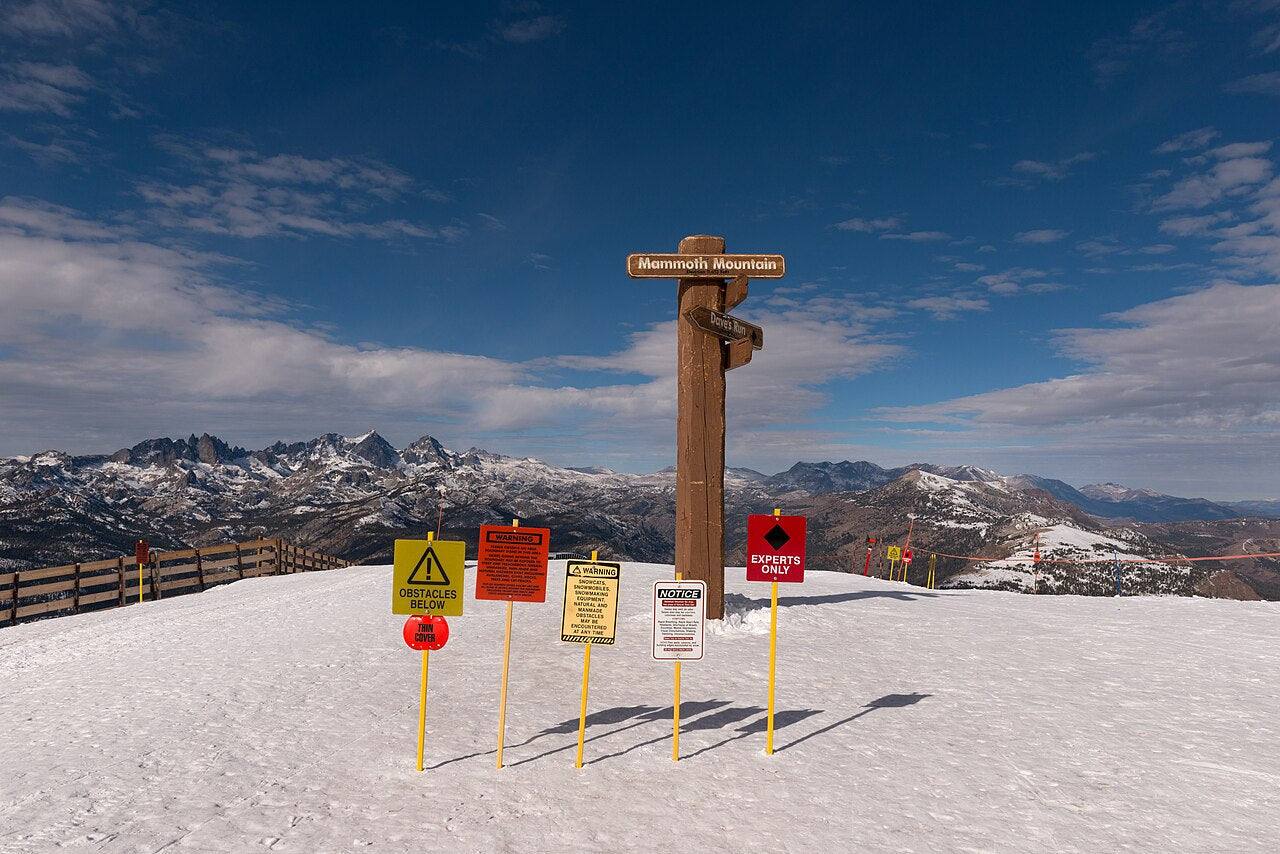
Experts: Head to Chair 23 for Wipeout, Dropout, and the Paranoid Flats — a cluster of chutes off the summit ridge known locally as "The Noids." Chair 23 is nicknamed "the Mothership" for a reason: it is the highest chair on the mountain, faces north, and reloads with wind buff. Locals describe the experience of catching a 20 mph southwest wind as the whole face getting "smeared like cream cheese" — wind-deposited chalk that is as fun as fresh powder and genuinely original to Mammoth's alpine exposure. When it is on, it is world-class. When it is not, the variable snow and exposed rocks keep you honest.
From the Panorama Gondola, drop into Climax, Huevos Grandes, or the Cornice Bowl. The hike-to terrain around Dragon's Back, The Hemlocks, and Outpost Glades holds powder stashes long after a storm. The traverse to Dragon's Tail is north-facing and protected, but the route is tricky and there are fatal cliff bands if you drop the wrong side of the ridge. Follow existing traverse lines, ski with a buddy, and do not treat it like a casual cut-through.


4. Lift Tickets & the Ikon Pass
Here is the blunt math: Mammoth walk-up day tickets in 2025/26 ran roughly $180–240 for adults. At those prices, a family of four is looking at $700+ before lunch. Eligible military buyers could still find adult 1-day tickets around $131 as of spring 2026, which tells you what the resort considers "discounted." That pricing makes the Ikon Pass the default choice for most serious skiers.
| Ikon Pass (Adult 23+) | $1,349 renewal / $1,399 new · Mammoth unlimited, no blackout |
| Ikon Base Pass (Adult) | From $949 · Mammoth unlimited with blackout dates (Dec 26-30, Jan 16-17, Feb 13-14) |
| Ikon Session Pass | From $299 · 2-4 day bundles with blackout restrictions |
| Mammoth Quad Pack+ | ~$100/day for 4 days before late-July price increase; no blackout dates |
| Day Ticket | Approx. $180–240 adult · dynamic pricing; buy online, never at the window |
The consensus among regular visitors is blunt: you are almost forced into an Ikon Pass to make the per-day math make sense. If you are skiing four or more days at Mammoth this season, the pass pays for itself. If you are only coming for one weekend, look for the Quad Pack+ or Ikon Session Pass windows.
5. Getting There
Mammoth's location is both its superpower and its bottleneck. It is the closest major skiing to Southern California's 12+ million people, but that same proximity creates weekend traffic on US-395.
- Mammoth Yosemite Airport (MMH): 14 miles / 25 minutes. Seasonal direct flights from LAX, SFO, San Diego, and Denver. Book early; seats disappear fast, and winter weather can cancel flights.
- Reno-Tahoe International (RNO): 171 miles / 3.5 hours. Often the most reliable winter option if MMH is weathered out.
- Los Angeles (LAX): 318 miles / 5.5–7 hours depending on traffic. Leave by 4 a.m. on a Saturday if you want first chair. Many repeat visitors say the difference between a 5-hour and 8-hour drive is simply whether you leave by noon on Friday.
- San Francisco / Bay Area: ~300 miles / 5.5–6 hours.
US-395 is the only paved route from LA; seasonal passes like Sonora Pass (Hwy 108), Monitor Pass (Hwy 89), and Tioga Pass (Hwy 120) are closed in winter. Check Caltrans QuickMap or 511 before you leave. Chain controls are common on the mountain approaches, and winter tires or AWD are strongly advised. In a storm, 395 can close for hours with no alternate plowed road.
Once in town, the FREE Mammoth Mountain Trolley connects The Village, Canyon Lodge, Main Lodge, and town stops every 15 minutes during ski season. A car is useful but not mandatory if you're staying in The Village or along the trolley line. Parking at the mountain is free, but the lots fill by 8:30 a.m. on peak days — some locals aim for 7:00–7:30 a.m. If Main is full, Canyon and Eagle usually have more space and shorter lift lines.

6. Where to Stay
Your base matters at Mammoth because mornings are when the mountain wins or loses your day.
- The Village at Mammoth: Pedestrian village with direct gondola access, restaurants, and shops. Condos run roughly $200–400/night depending on season. Best if you want to leave the car parked.
- Mammoth Mountain Inn: Walk-across-the-lot ski-in/ski-out at Main Lodge. A long-time family default with pool, hot tub, and on-site restaurant. Rooms historically $159–299/night.
- The Westin Monache Resort: Connected to the Village gondola; suites with kitchenettes and fireplaces. On-site Whitebark Restaurant. Rates often $260–460/night.
- Juniper Springs Resort: Near Chair 15 / Eagle Lodge; condo-style with kitchens, pool, and hot tubs. Good for families whose kids are in ski school at Canyon or Eagle.
- Tamarack Lodge: Lakes Basin location, quieter, 10 minutes from Canyon. Cross-country and snowshoe trails out the door.
- Town of Mammoth Lakes / June Lake: Hotels and Airbnbs from ~$100–200/night in town; June Lake is cheaper and 20–30 minutes away. You will need the free shuttle or a car.
If your kids are in ski school, the practical move is to book near Canyon Lodge so the Schoolyard beginner area, lesson drop-off, and your room are all within walking distance. That one decision cuts a lot of morning friction out of a family trip.

7. Eating & Drinking
On-mountain food has improved but is still resort-priced. The local move is to pack lunch or grab groceries at Vons in town.
- McCoy Station: Mid-mountain cafeteria with real food and views. Less chaotic than the base lodges.
- The Mill: Base-area deck, pulled-pork nachos, Bloody Marys, and lawn chairs on spring days. A reliable pick for on-mountain food and people-watching.
- Tusks Bar (Main Lodge): Slopeside sports bar with a big sun deck overlooking Unbound Main Park.
- Yodler Restaurant & Bar: Across from Main Lodge; Euro-style après with a Bavarian-inspired menu, fireplace lounge, and sundeck.
- Mammoth Brewing Company: Award-winning brewery across from the Village gondola. Tasting flights, live music on weekends, and a beer garden.
- Shelter Distilling: In The Village; gin distilled from local Pinyon Pine, house beer, and a buffalo chicken burger that keeps coming up in reviews.
- Lakanuki Tiki Bar: In The Village; tropical-themed après with Mai Tais and late-night karaoke.
- The Clocktower Cellar: Under Alpenhof Lodge, across from the Village gondola. Local haunt with a deep whiskey selection, pool, and foosball.
- Black Velvet Coffee / Schat's Bakery / The Stove: Morning essentials in town. Old New York Deli & Bagel Co. is the go-to for breakfast burritos and bagels.
8. Ski School & Lessons
Mammoth's ski school is one of the largest in California and is especially strong for kids and first-timers. The dedicated beginner zones at Schoolyard and the Discovery Chair keep novices separate from fast traffic.
- Small Fry (ages 4–6): beginner-focused, full-day programs around $209–249 including lunch.
- Young Riders (ages 7–12): skill-based groups across ability levels.
- Private lessons (ages 3+): roughly $599–799 per half day; can be shared with up to four people to split cost.
- Mountain Rangers: season-long program for ages 5–10, running January through late March. Registration opens in August 2026.
Kids under 5 ski free at Mammoth. Book lessons 2–3 weeks ahead for holiday periods; morning slots fill first. For park riders, the Unbound program offers freestyle camps and progression sessions.
9. Altitude & Weather
The base at Main Lodge is around 8,900 ft, and the summit hits 11,053 ft. That altitude is no joke if you are coming from sea level. The sun is intense — Mammoth averages 300+ days of sunshine a year — and Sierra winds can shut down the summit lifts with little warning.
- Take it easy the first night; skip the alcohol.
- Drink more water than you think you need, starting the day before you arrive.
- SPF 50+, lip balm, and sunglasses or goggles are mandatory at 11,000 ft.
- Have a backup plan for wind holds. The Panorama Gondola and Chair 23 close regularly when Sierra winds kick up.

10. Après-Ski & Nightlife
Mammoth's après scene splits between the base areas and the town. Canyon Lodge hosts DJs on weekend afternoons, Main Lodge has Tusks and Yodler, and The Village has Shelter and Mammoth Brewing. For a more local feel, head to the Clocktower Cellar or Old Mammoth Road spots.

The Village is generally the place to be post-ski — Shelter Distilling for a post-ski spirit, Lakanuki if you want a tropical vibe in the snow, or the Clocktower Cellar for whiskey and pool. It is less formal than Aspen or Vail and more of a beer-and-sundeck culture. As one regular put it, Mammoth après is about "packed sun decks and a generally festive atmosphere," not dress codes or bottle service.
11. Crowds & Strategy
This is the section that keeps Mammoth from a 5-star score. On powder Saturdays and holiday weekends, lift lines at Main Lodge and the Panorama Gondola can hit 30–40 minutes. The advice you will hear over and over is consistent:
- Ski Monday–Thursday. The mountain feels twice as big.
- Arrive at the lift by 8:30 a.m. Park at Canyon or Eagle if Main Lodge is full.
- On powder days, head to Chair 12 — it holds snow longer and sees fewer people than Cornice.
- Ski through lunch. Lines shrink between 12:30 and 2 p.m.
- Watch for upper-mountain wind holds. If the summit closes, Chairs 3 and 12 and the Main Lodge trees become your best friends.
Regulars will tell you the holiday season does get crowded, but with 3,500 acres you can usually find an uncrowded place. The key is moving away from the base lifts and not defaulting to the Panorama Gondola line all morning.
12. Best Time to Visit
January–March is the sweet spot for consistent snow and fewer crowds than the holiday period. April and May are famous for corn snow, T-shirt skiing, DJs at the base, and a spring-party vibe. In big years, Mammoth stays open into June and occasionally July 4.
A May visit is a completely different experience: you can ski in a T-shirt on corn snow that feels like carving through butter, chase the sun from Canyon to Main Lodge, and treat the base areas like a beach party with DJs and outdoor grills. If you are not a fan of sub-zero temperatures and just want hero snow and a tan, spring at Mammoth is hard to beat.

13. Pre-Trip Checklist
- ☐ Book Ikon Pass before the next price increase (prices rise in steps through December).
- ☐ Reserve lodging early, especially for holiday weeks; Canyon Lodge is best for ski-school families.
- ☐ Check MMH flight schedules; Reno is the best backup airport.
- ☐ Check Caltrans QuickMap / 511 for US-395 chain controls and closures.
- ☐ Pack layers, sunscreen, and hydration supplies for altitude.
- ☐ Download the Mammoth app for lift-status updates and snow reports.
- ☐ If skiing peak weekends, set an alarm for 7 a.m. and aim for first chair.
14. Mammoth vs Palisades Tahoe vs Big Bear
| Resort | Terrain | Season Length | Crowds | Best For |
|---|---|---|---|---|
| Mammoth Mountain | 3,500 acres, 178 trails, 11,053 ft summit | Longest (Nov–June/July) | Heavy on weekends | Long season, experts, park riders |
| Palisades Tahoe | 6,000 acres combined, steep KT-22 terrain | Nov–May | Moderate-Heavy | Challenging terrain, Tahoe scene |
| Big Bear Mountain | Small, ~200 acres per peak, SoCal local hill | Nov–Apr | Very heavy | Day trips from LA, beginners |
15. FAQ
Common questions about Mammoth Mountain
When does Mammoth open for 2026/27?
Mammoth Mountain has announced a target opening day of Friday, November 13, 2026, weather permitting.
Is Mammoth good for beginners?
Yes. About 25% of the mountain is beginner terrain, with dedicated learning zones at Schoolyard and the Discovery Chair. The ski school is well regarded for kids and first-timers.
How much is the Ikon Pass for 2026/27?
The full Ikon Pass is $1,349 for renewing adults and $1,399 for new passholders. The Ikon Base Pass starts at $949. Prices increase in steps through December 2026.
Does Mammoth have blackout dates on the Ikon Base Pass?
Yes. Mammoth has blackout dates on the Ikon Base Pass: December 26–30, 2026; January 16–17, 2027; and February 13–14, 2027.
How long is the ski season at Mammoth?
Typically early November through late May or June. In big snow years Mammoth has stayed open into July.
What is the best base area to start from?
Main Lodge is central but busiest. Canyon Lodge is great for intermediates and après. Eagle Lodge is the least crowded and best for beginners.
Is Mammoth crowded?
On weekends and holidays, yes. Arrive early, park at Eagle or Canyon if Main Lodge is full, and ski midweek whenever possible.
What should I pack for Mammoth?
Layered clothing, a waterproof shell or insulated ski jacket, ski pants, goggles, SPF 50+ sunscreen, lip balm, and a hydration bottle.
16. Gear & Final CTA
Mammoth's long season means you will likely ski everything from mid-winter powder to spring corn. A versatile kit helps. Our picks from the store:
- NowInSnow 10K Waterproof 3L Fleece-Lined Ski Jacket — warm enough for January, breathable enough for April.
- DØCSNO 20K ePTFE 3L Waterproof Ski Pants — durable for chair-lift days and park laps.
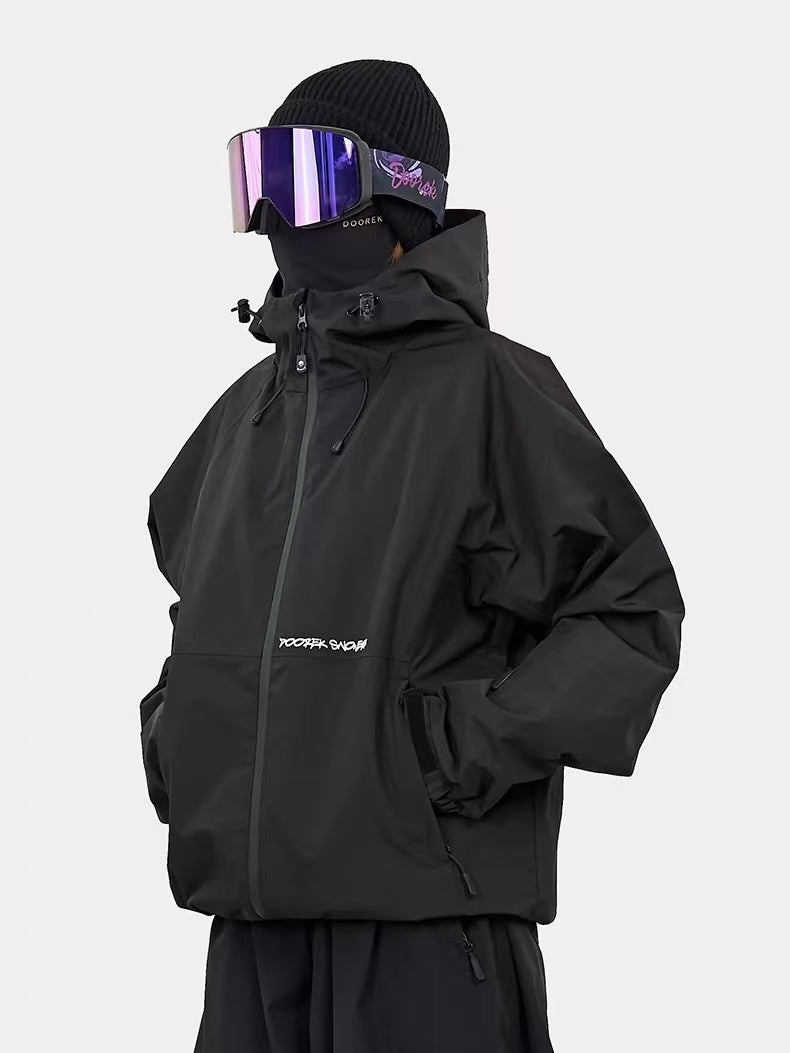
- Monterest 20K Kongshan Rain Storm Hardshell Jacket — a solid shell layer for wind holds and Sierra storms.
Bottom line: If you're on the Ikon Pass and can ski midweek, Mammoth is one of the best values in North America. If you're locked into holiday weekends, expect crowds — but the terrain and season length still justify the trip.
Our Take
Mammoth Mountain is the definitive California ski destination: huge terrain, the longest season in the state, and a real mountain town at the base. Its weaknesses are exactly what you would expect from a resort five hours from LA — weekend crowds, wind holds, and expensive day tickets. Come with the Ikon Pass, a midweek mindset, and a backup plan for when the summit closes, and you will understand why locals put up with the rest.
Disclaimer: Opening dates, prices, and pass details are accurate as of August 2026 based on Mammoth Mountain, Alterra/Ikon Pass, and third-party resort reports. Prices and policies change; confirm directly before purchasing.